


For the past two months, I’ve been working on a new startup with my old friend, Nejc, and a couple of early customers. It’s called Arna and it can reliably automate in-house legal work, especially when it involves more people.
We have raised a pre-seed round from a group of angels and investors with a track record in entrepreneurship. We are using the money to develop Arna and prove its value across use cases.
Why?
A tech startup can now do one of 3 things: models, assistants or automation.
Model vendors are a prestigious club with unprecedented access to capital and talent. Bless their GPUs. I like to think of them as employment agencies that offer an unlimited supply of artificial knowledge workers who become cheaper and smarter every odd week.
What they have been able to do for us so far has mainly depended on the second type of startup: those building assistants. Unlike models, assistants are easy to make. There are hundreds of them in legal alone. While some have skyrocketed, there are now lawyers who are vibe coding their clones in a weekend.
Assistants help us do our job faster, but they don’t attack the inefficiencies inherent to human organisations. You “hire” one or two of them to “sit” next to you and help you research, code, draft or review documents, etc. but they don’t actually pick up your work.
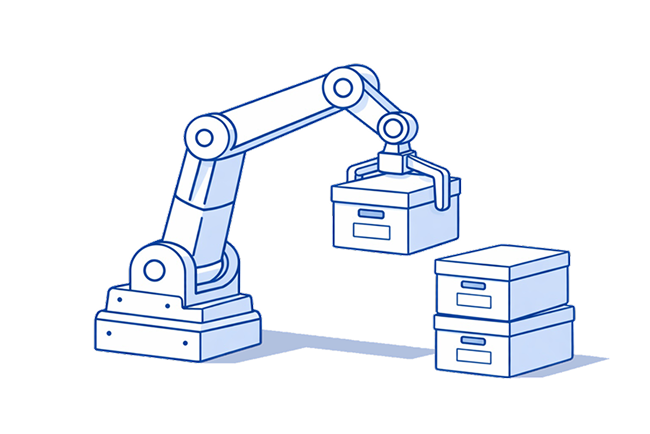
Automation is when AI agents aren’t assistants, but rather parts of our organisation. You email Arna like you would a colleague. It sends a document for you to review, like a colleague would. It is following the same rules and accessing the same internal knowledge as you, so you don’t have to explain everything over and over again.
Assistants scale vertically by enabling us to do tasks faster. Automation scales horizontally, by picking up tasks, so we don’t have to.
AI adoption in enterprises sucks because assistants aren’t enough, while automation isn’t something one can vibe code in a weekend. Knowing what to develop demands building relationships and unlocking internal knowledge. Being “forward deployed”, as it were.
I’ve spent my entire career developing products and engineering teams that serve businesses. The last 3 years I’ve spent building data pipelines and automating various tasks in sales organisations with AI. I will now do the same in legal with the help of Nejc, one of the brightest lawyers I know, who has also learned these lessons over the past 2 years while developing a legal AI assistant.
Legal, because, after coding, it is being most profoundly reshaped by AI. Now, because the models have become both good enough and cheap enough to support complex workflows. Nejc and me, because, besides complementary skillsets, we both love a good conversation, which, in the future, may turn out to be the last viable skill.
I will share more thoughts about our progress, findings and AI in general. I’m told it’s good for marketing. Thank you for your support and looking forward to automating all the boring parts of work.